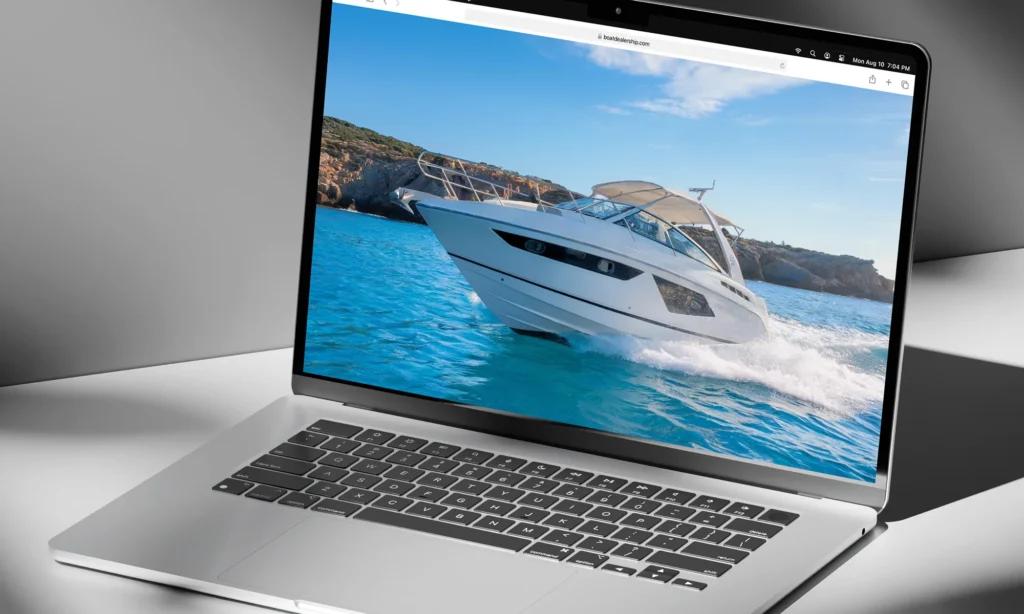

Boat Dealership Sites Are Rapidly Falling Behind
Let’s just be blunt about it; most boat dealership websites in 2025 still look like they were built in 2012. And I get it, it’s easy to overlook your website when sales are still rolling in from word-of-mouth, boat shows, or the same old inventory feeds. But here’s the reality: the way customers shop for boats has changed dramatically, and if your site hasn’t, you’re already losing sales to your competitors.
I’ve spent the last few years redesigning websites for over 50+ marine dealerships, from small local mom-and-pop shops to multi-location yacht brokerages, and I’ve seen the same problems pop up again and again. So, why are boat dealership websites so outdated? And what’s stopping the industry from catching up?
Your Site Was Built for Inventory, Not Customers
Customers Want More Options
Most dealership sites were built with one primary goal: display inventory. That’s it. You pick a template, plug in your inventory feed, and call it a day. The problem? Today’s buyers expect a digital experience that goes way beyond listings.
It’s not enough to just show the boats. Customers want to compare models, view high-quality images, explore payment options, watch walkthroughs, read specs, and schedule a demo – all without having to call a salesperson.
But instead, most sites are clunky, hard to navigate, and clearly designed around how the dealership wants to organize things, not how the customer wants to shop.
Build Sites For Shoppers, Not Salesmen
I flipped the approach. When I redesign a boat dealership website, I start with the buyer journey, not the backend inventory system.
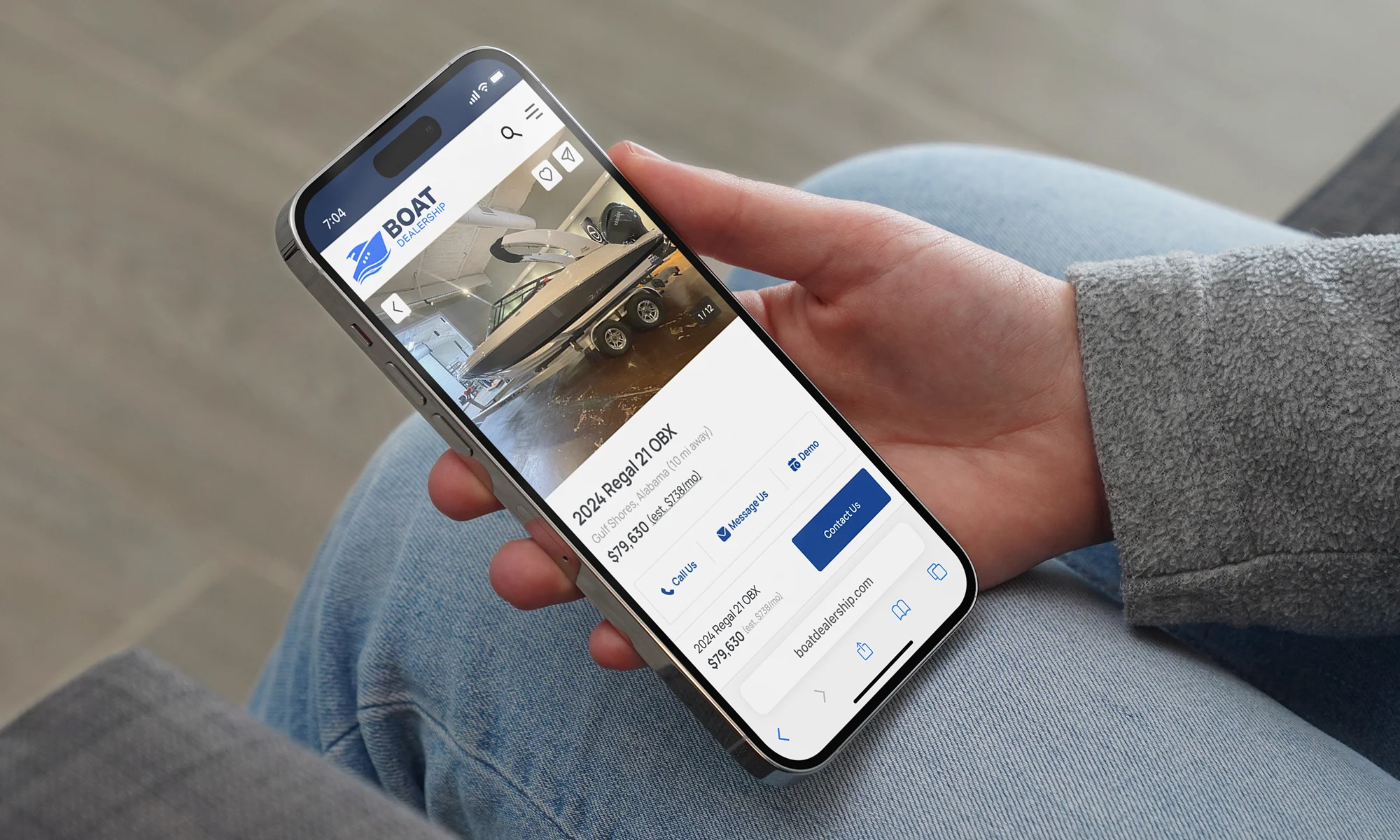
We map out key paths: first-time visitors, trade-in customers, families looking for pontoons, serious anglers, luxury yacht buyers, etc. Then we design around them. That means better filtering, simpler navigation, cleaner listing cards, and strong calls to action that balance urgency with lifestyle messaging.
The inventory is still the main purpose of the site, but it’s layered under a user-focused UI that sells boats like a premium e-commerce site, not a Craigslist clone. The old way of just “having inventory online” isn’t cutting it anymore. Customers expect a guided, high-end shopping experience. If your site doesn’t deliver that, they’ll bounce straight to an online marketplace, or even worse, your competitor.
Templates Don’t Fit the Modern Marine Buyer
The Market Has Evolved, The Templates Haven’t
A lot of marine websites are built on cookie-cutter templates from companies that serve every industry: RV, powersports, motorcycles, trailers, lawnmowers, you name it.
These templates are one-size-fits-all, and it shows. Listings are generic. Pages are bloated with random stock images. Lead forms look like they were made in 2007. And the mobile experience? Usually an afterthought.
The modern boat buyer is different. With online car shopping exploding with sites like Carvana and CarMax, users know what a good online shopping experience is. They’re savvy, they’re searching online before ever visiting your store, and they want to feel a connection with your brand, not just see a spreadsheet of specs.
Designing Sites For Modern Shoppers
I build custom-designed websites specifically for boat dealerships. That means every layout, filter, feature, and mobile interaction is crafted around how marine customers actually shop.
Instead of forcing your brand into a template designed for other markets, we build a digital showroom that reflects your actual in-store experience – visually, functionally, and most importantly, emotionally.
In 2025, using a generic template found on every dealer website in town screams “we don’t care about our digital experience.” And trust me, buyers pick up on that. The dealerships that win are the ones that look premium and personalized from the very first click.
Marketing & UX Are Still an Afterthought
Success at Boat Shows, Failure on Your Website
It’s crazy to me how many dealerships drop $100k+ on boat show displays but still have zero website strategy.
No retargeting. No email automation. No inventory-specific landing pages. No lead scoring. No urgency messaging. No real UX design. Just a homepage carousel listing the brand sold, and then a slow-loading inventory page.
The result? A website that isn’t selling; it’s just sitting there. Being “online” is not the same as being optimized. Your sales team does hours of work at boat shows to close the deal, only for it to fall apart when users log onto your site.
Your Website Is Your Marketing Foundation
Websites aren’t just about looking good, they’re the entire foundation of your digital marketing strategy. All your efforts, from billboards to digital ads to Google searches, rely on your website performing at 100% efficiency.
When I build or redesign dealership sites, here are a few strategies that I always use to ensure conversions are first priority:
- Inventory pages with urgency messaging (“25 View This Week!”)
- Trade-in forms that actually convert
- Sticky “Call Now” buttons on mobile
- Newsletter opt-ins that don’t feel like spam
- SMS follow-ups for hot leads
- Google Ads landing pages with real ROI tracking
The website becomes the engine for all marketing efforts, not just a brochure. It collects leads, nurtures them, books demos, and fuels remarketing campaigns automatically.
The dealerships that see 10–20% more conversions aren’t doing anything crazy, they just treat their website like a salesperson, not a business card. If your site isn’t set up to market and convert, you’re wasting your marketing budget to send users to a frustrating experience.
Final Thoughts: Upgrade Your Digital Experience
If you’re running a boat dealership in 2025 and still relying on the same site you’ve had for years, here’s the hard truth:
Your website is outdated.
Your leads are drying up.
And your buyers are going elsewhere..
But here’s the good news: fixing it doesn’t mean reinventing the wheel. It just means partnering with someone who understands your industry, your customer, and how to build a digital experience that actually sells boats.
Because let’s be honest – your boats deserve better. And so do your customers.